Textile Futures 2040



Textile Futures 2040


ONLINE LAUNCH
EVENT
Join our online launch of Textile Futures 2040, four bold scenarios for how the textile industry could look in 2040. We’ll walk through each world, why futures thinking matters when planning for an uncertain future, and how the scenarios were built with people across the value chain, with time for your questions. You’ll also see the toolkit in action and how your organisation can use the scenarios to test its strategy and future-proof its business.
Developed by:

Supported by:

THE BIG
PICTURE
The textile industry sits at a genuine point of leverage for global progress on climate and equitable work. Comparable in scale to the world’s seventh largest economy¹, and providing livelihoods for around one in eight workers worldwide³, it has the reach and capital to make transformation possible well beyond its own supply chains, particularly across the producing economies of South and Southeast Asia that carry much of its labour and environmental cost today. That leverage is already being put to work.
The textile industry sits at a genuine point of leverage for global progress on climate and equitable work. Comparable in scale to the world’s seventh largest economy¹, and providing livelihoods for around one in eight workers worldwide³, it has the reach and capital to make transformation possible well beyond its own supply chains, particularly across the producing economies of South and Southeast Asia that carry much of its labour and environmental cost today. That leverage is already being put to work.
The textile industry sits at a genuine point of leverage for global progress on climate and equitable work. Comparable in scale to the world’s seventh largest economy¹, and providing livelihoods for around one in eight workers worldwide³, it has the reach and capital to make transformation possible well beyond its own supply chains, particularly across the producing economies of South and Southeast Asia that carry much of its labour and environmental cost today. That leverage is already being put to work.
Nearly 88 percent of brands now hold formal emissions targets⁴, and momentum toward decarbonisation continues to build. Turning that commitment into results at the pace the industry’s scale demands remains the task ahead: the sector still accounts for around 4 percent of global greenhouse gas emissions², raw material emissions have risen 20 percent since 2020⁵, and polyester alone still accounts for 59 percent of global fibre output⁶. Closing that gap, at pace, is the central opportunity the industry now faces, and the one this project is designed to help meet.
Nearly 88 percent of brands now hold formal emissions targets⁴, and momentum toward decarbonisation continues to build. Turning that commitment into results at the pace the industry’s scale demands remains the task ahead: the sector still accounts for around 10 percent of annual global carbon emissions², raw material emissions have risen 20 percent since 2020⁵, and polyester alone still accounts for 59 percent of global fibre output⁶. Closing that gap, at pace, is the central opportunity the industry now faces, and the one this project is designed to help meet.
Nearly 88 percent of brands now hold formal emissions targets⁴, and momentum toward decarbonisation continues to build. Turning that commitment into results at the pace the industry’s scale demands remains the task ahead: the sector still accounts for around 10 percent of annual global carbon emissions², raw material emissions have risen 20 percent since 2020⁵, and polyester alone still accounts for 59 percent of global fibre output⁶. Closing that gap, at pace, is the central opportunity the industry now faces, and the one this project is designed to help meet.


INTRODUCING
TEXTILE
FUTURES
2040


Textile Futures 2040 is a project developed by Forum for the Future, supported by the H&M Foundation, that examines the plausible futures towards which the global textile industry may be moving. Building on more than a decade of futures work in the sector, including the earlier Fashion Futures scenarios, the project responds to a moment of significant uncertainty. In conditions of rapid change, planning for a single expected future is insufficient.
The project instead sets out four distinct scenarios for the industry in 2040, each intended to help decision makers examine their assumptions, test strategies against a range of possible conditions, and identify the choices that will remain sound however the future unfolds.
INTRODUCING
TEXTILE
FUTURES
2040
Textile Futures 2040 is a project developed by Forum for the Future, supported by the H&M Foundation, that examines the plausible futures towards which the global textile industry may be moving. Building on more than a decade of futures work in the sector, including the earlier Fashion Futures scenarios, the project responds to a moment of significant uncertainty. In conditions of rapid change, planning for a single expected future is insufficient.
The project instead sets out four distinct scenarios for the industry in 2040, each intended to help decision makers examine their assumptions, test strategies against a range of possible conditions, and identify the choices that will remain sound however the future unfolds.
4
%
of global greenhouse gas emissions come from the fashion industry.²
20
%
the rise in emissions from raw material production for apparel, homeware, and footwear since 2020, the gap this project is designed to help close.⁵
1
IN
8
workers worldwide are employed within the textile value chain.³
10
%
20
%
1
IN
8
of annual global carbon emissions are attributable to the textile industry.²
the rise in emissions from raw material production for apparel, homeware, and footwear since 2020, the gap this project is designed to help close.⁵
workers worldwide are employed within the textile value chain.³

INTRODUCING
TEXTILE
FUTURES
2040
Textile Futures 2040 is a project developed by Forum for the Future, supported by the H&M Foundation, that examines the plausible futures towards which the global textile industry may be moving. Building on more than a decade of futures work in the sector, including the earlier Fashion Futures scenarios, the project responds to a moment of significant uncertainty. In conditions of rapid change, planning for a single expected future is insufficient.
The project instead sets out four distinct scenarios for the industry in 2040, each intended to help decision makers examine their assumptions, test strategies against a range of possible conditions, and identify the choices that will remain sound however the future unfolds.
FOUR
SCENARIOS
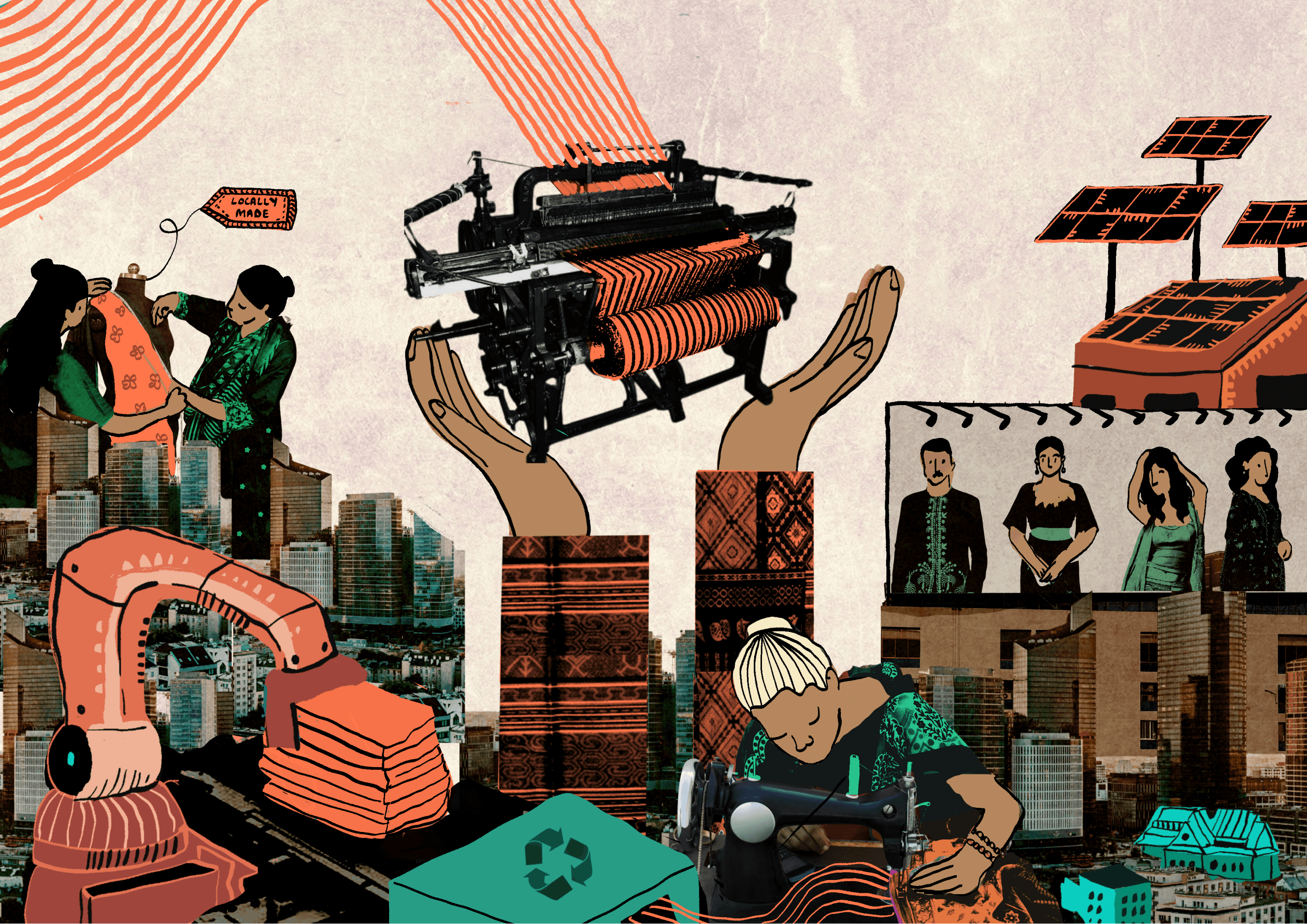
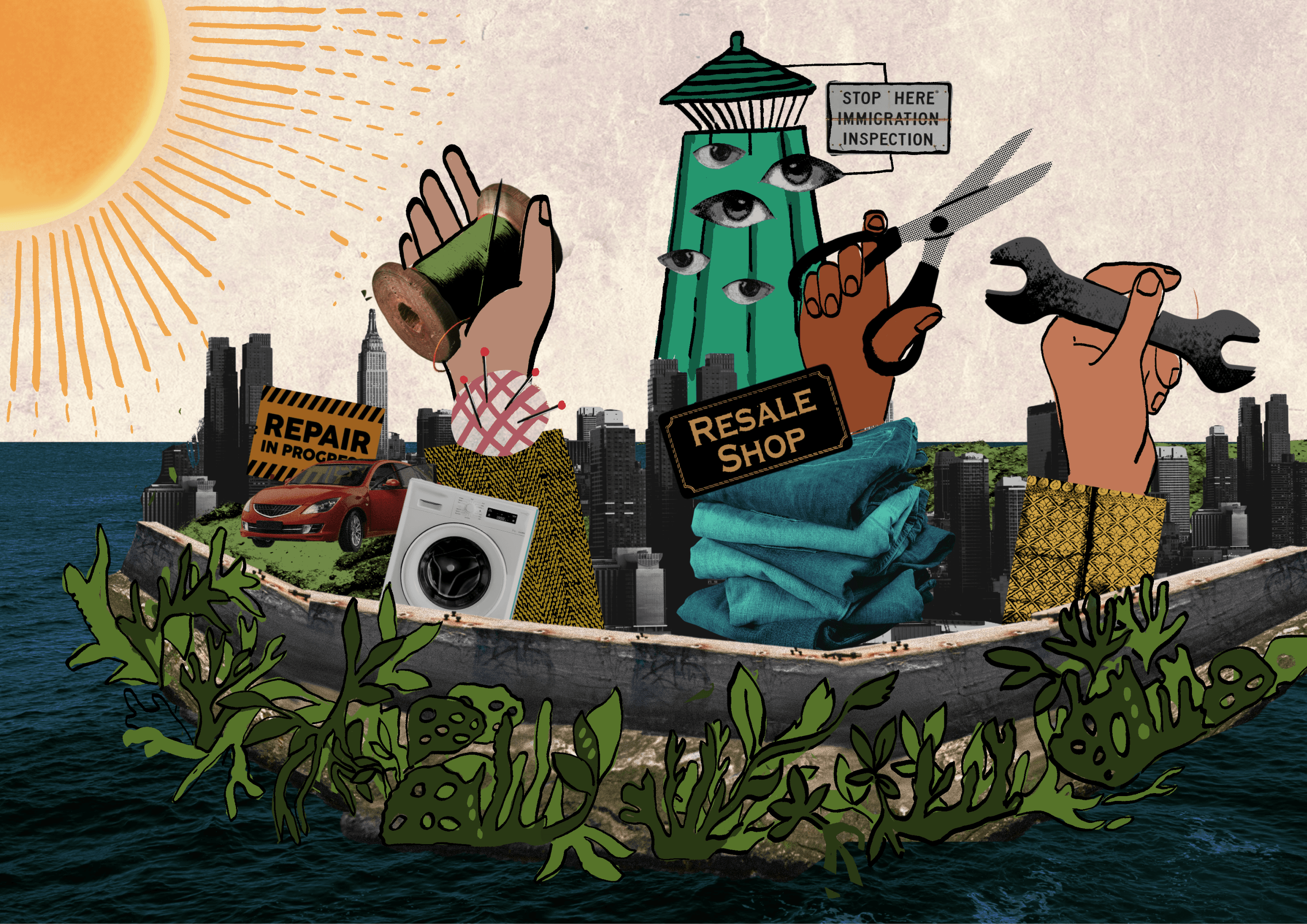
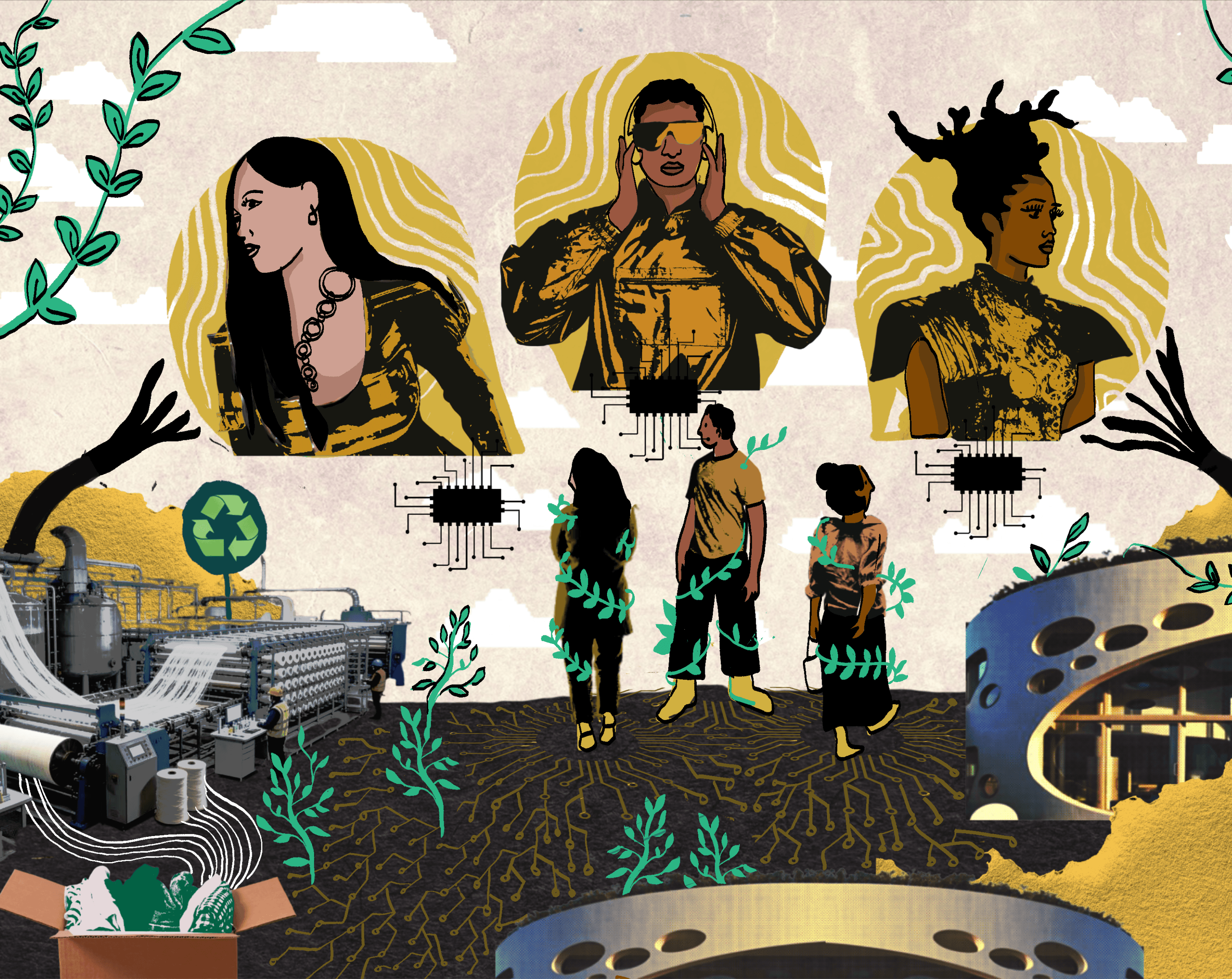
Four plausible futures for the textile industry in 2040, each arising from a different combination of the forces now reshaping the sector, and each presenting its own opportunities, tensions, and trade-offs.


EXPLORE THE
TOOLKIT
The toolkit is for anyone who wants to explore futures thinking in the textile industry, whether they work for a brand, a manufacturer, a union, a university or a civil society group. It takes teams from reading the scenarios to working with them. Guided activities and discussion prompts help you step into each of the four worlds, think about the part your organisation would play there, and test your current strategy against conditions very different from today’s.
You do not need any previous experience of futures work. The aim is to help you question the assumptions you rely on and act now to move the industry towards a just and decarbonised future.
The toolkit is for anyone who wants to explore futures thinking in the textile industry, whether they work for a brand, a manufacturer, a union, a university or a civil society group. It takes teams from reading the scenarios to working with them. Guided activities and discussion prompts help you step into each of the four worlds, think about the part your organisation would play there, and test your current strategy against conditions very different from today’s. You do not need any previous experience of futures work. The aim is to help you question the assumptions you rely on and act now to move the industry towards a just and decarbonised future.
ACTIVITY 02
Step into the world
2026
2033
2040
TEXTILE FUTURES 2040
WORKSHOP
TOOLKIT


POWER SHIFT

GLOBAL STORMS

NEW AGE CORPORATE

THE NEW NOOSPHERE
